
Background of The Stadium
The Mercedes-Benz Stadium is home to two massive clubs in the capital and most populous city in the US state of Georgia (Infoplease, 2019); MLS newbies Atlanta United and NFL favourites Atlanta Falcons. According to Stadiums of Pro Football (2017) The Mercedes-Benz Stadium has a seating capacity of 71,000 for matches and is expandable to seat over 80,000 for special events.
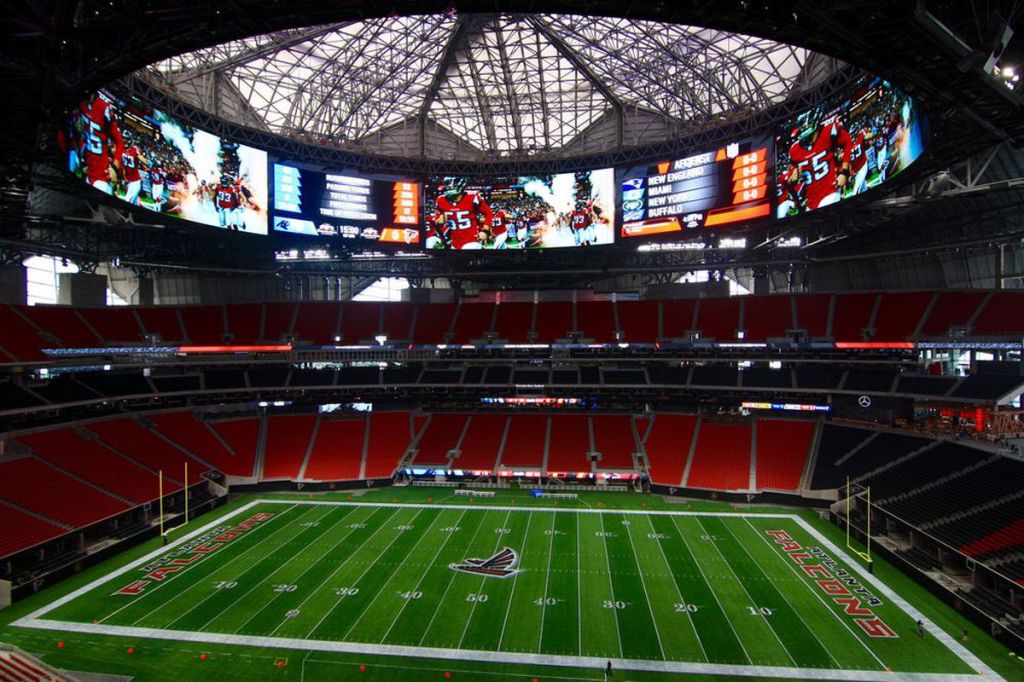
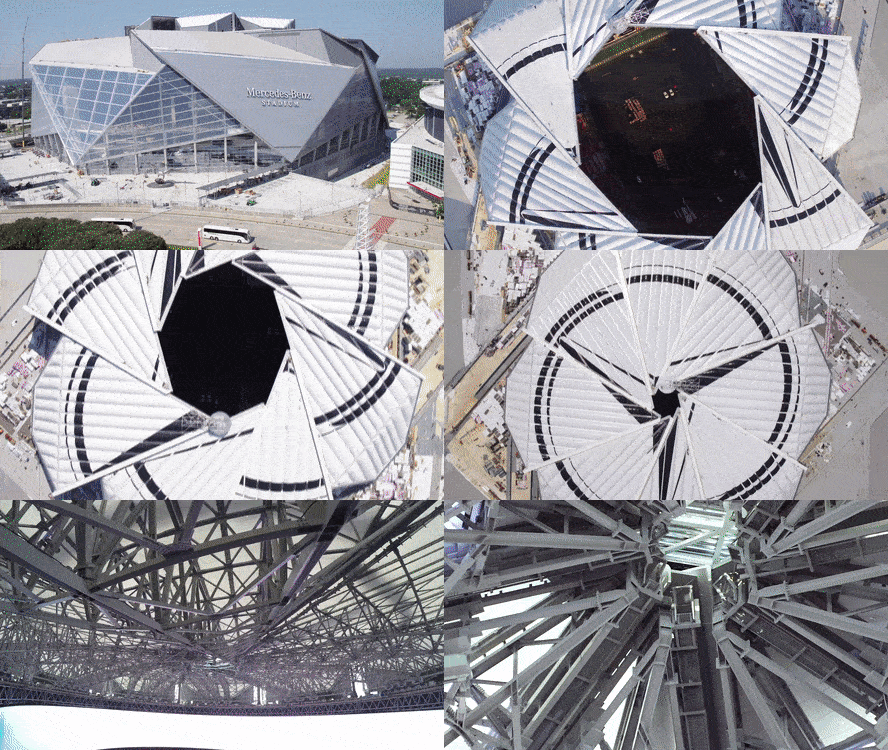
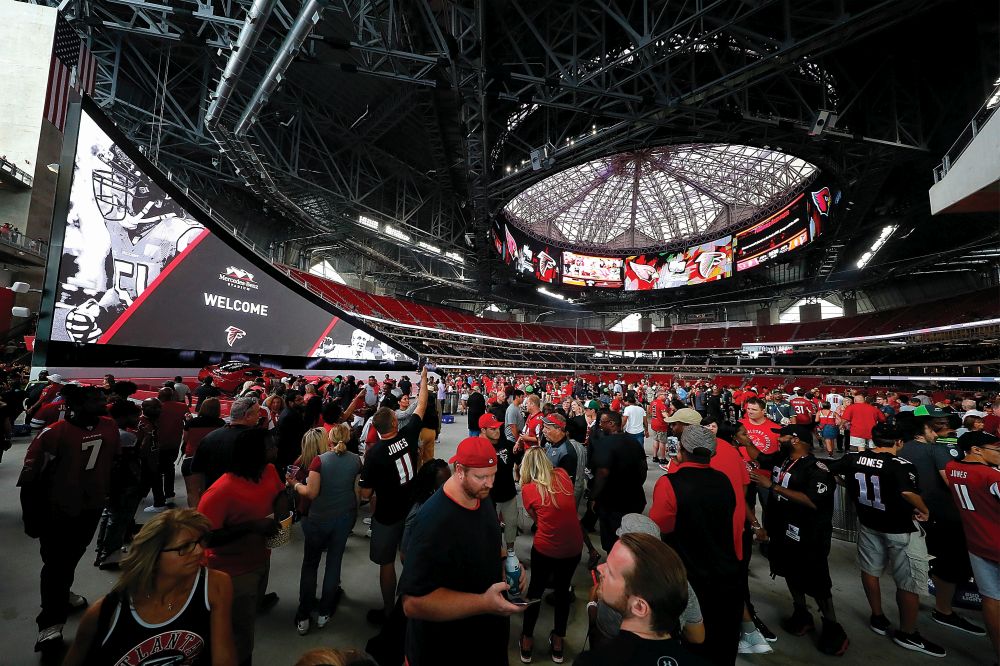
Inside the Mercedes-Benz Stadium fans encounter one of the most unique experiences in the sports. The driving force behind this experience is the halo-shaped, 63,800 square-foot video board. It is accessible for the fans as the 360 degree screen is 58 feet tall and 1,100 feet around and don’t forget its rare retractable roof (Stadium of Pro Football, 2017). In addition to the halo videoboard, there is a 100-foot high mega column 3D video board and multiple LED ribbon boards, which provide highlights and in-game stats. The unique experience Thompson et al (2016) suggests the sporting property has adapted to the need of social engagement with fans on new levels. This is due to the ever changing technologies, as a result the Mercedes-Benz stadium has adapted with technological advancement of new media age with the innovative display from their halo board, providing highlights, other game scores statistic and social media interactions in-game which fans want to see.
Accessibility is Key for Fans
The adaption of new media use from Mercedes-Benz stadium is a very important aspect for fan engagement while attending the venue. As Stoffel and Kapustka (2015) believe 40% of fans connect to a Wi-Fi device while at a stadium is to access social media. The stadium has the capacity to exceed consumers’ needs as Hochman (2017) state from the moment fans enter, they’ll be interacting with Mercedes-Benz’ all-fibre optic network. From digital ticket turn-styles, to Wi-Fi and gigantic video screens, nearly 4,000 miles of fibre connect the stadium’s digital infrastructure. This links with Reddy (2015) views suggesting that a percentage of fans, many of which younger, will leave stadiums if they cannot gain access to Wi-Fi. However Hochman (2017) also states that fan are able to live stream their video without problems. So they are able see and remember that sports experience for the positives, not remembering as they could not interact due to poor connectivity with on social media platforms. As Hammond (2014) believes the expansion of wireless capability for the venue being able to provide for fans to gain instant access to their social media is the most important aspect for fan engagement this day and age. Also Delia and Armstrong (2015) imply that access for fans to social media to share passions, and photos during live sport events can only have a positive effect for the sporting property.
The Stadium APP
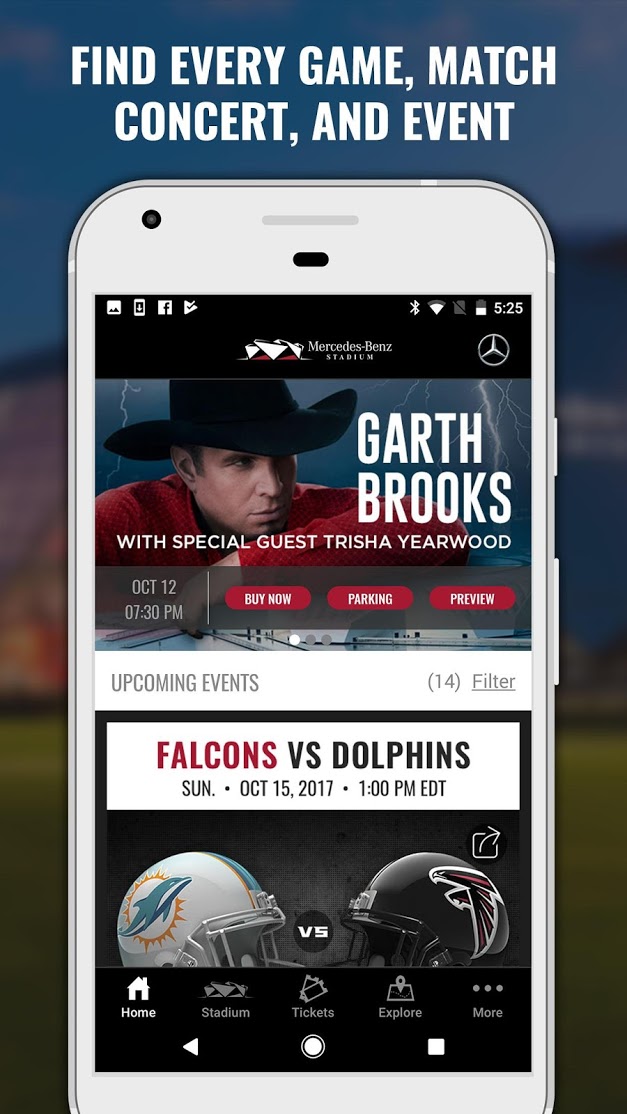


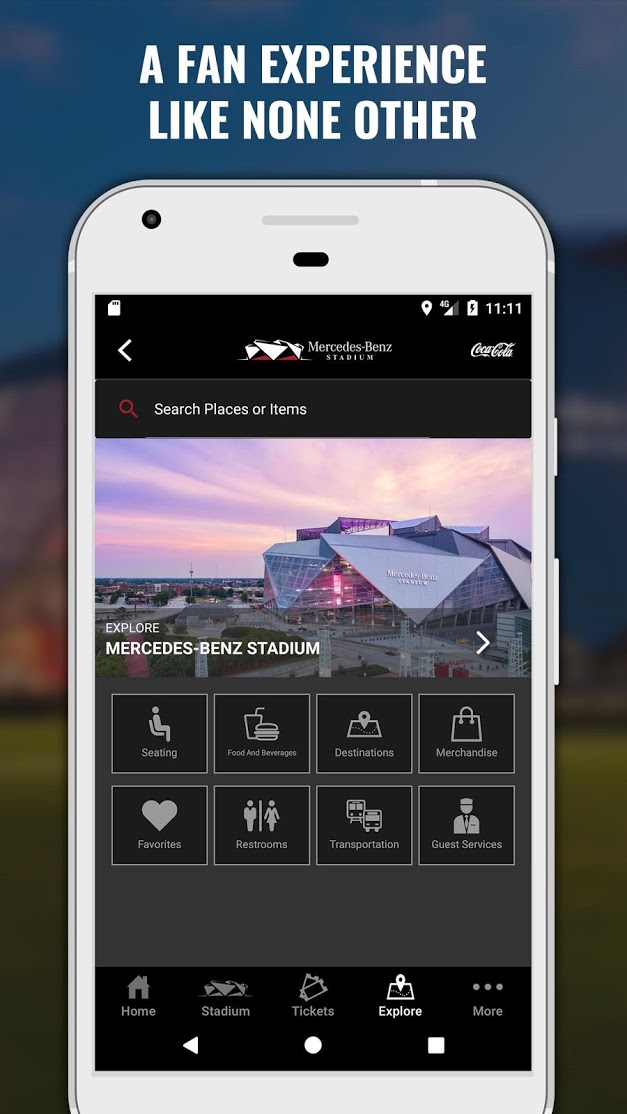
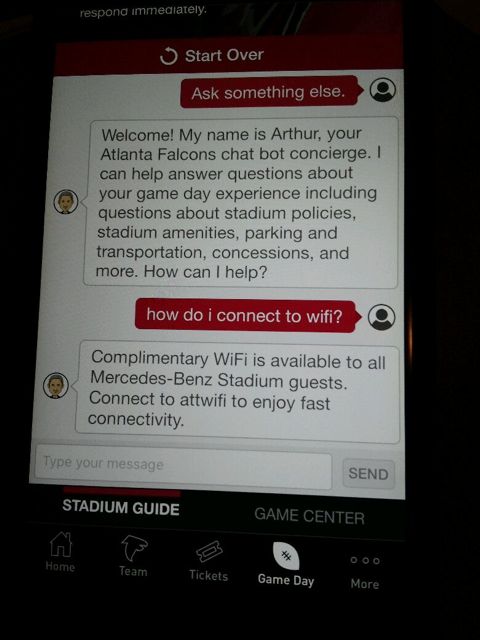
“New media and sport have undoubtedly adapted to one another in order to maximise their entertainment potential”(Horky and Stelzner 2013). An example the Mercedes-Benz Stadium has incorporated is the IBM-powered fan app that plays a key part in the experience. The fan engagement levels have increased due to the three different versions: one for Falcons fans, one for United fans and one for general visitors. Bassam (2018) believes that the main feature of the app is that it’s equipped with tools that assist with personal elements of someone’s visit, the key example is the feature of “Ask Arthur Blank”, A chatbot powered by Satisfi (Hochman 2017). The chatbot consists of a library of questions which will respond to questions like an Amazon Alexa to assist visitors. Massaro (2016) states the usage of bots opens up a completely new avenue for sports properties in giving them an ability to create a real go-to hub for fans. Due to the beliefs of Lefever (2012) explaining the importance of technological advancements and the expansion of new media markets have driven a complete different dimension for the sports property to deliver a greater experience for the fans.
Can Mercedes-Benz Stadium Withstand the Times?
It is hard to argue that Mercedes-Benz has been anything other than a fan engagement success since it opened. Fans love it, the attendance figures back this up as Stadium of Pro Football (2017) show the Falcons attendance increased by 2.6% after moving from the Georgia Dome. Also Atlanta United headed the MLS attendance charts with an average attendance of 48,200 in 2017, with that figure rising again in 2018. This shows that the stadium experience has been an huge influence in gaining a greater attendance in which has been on the decline for years.
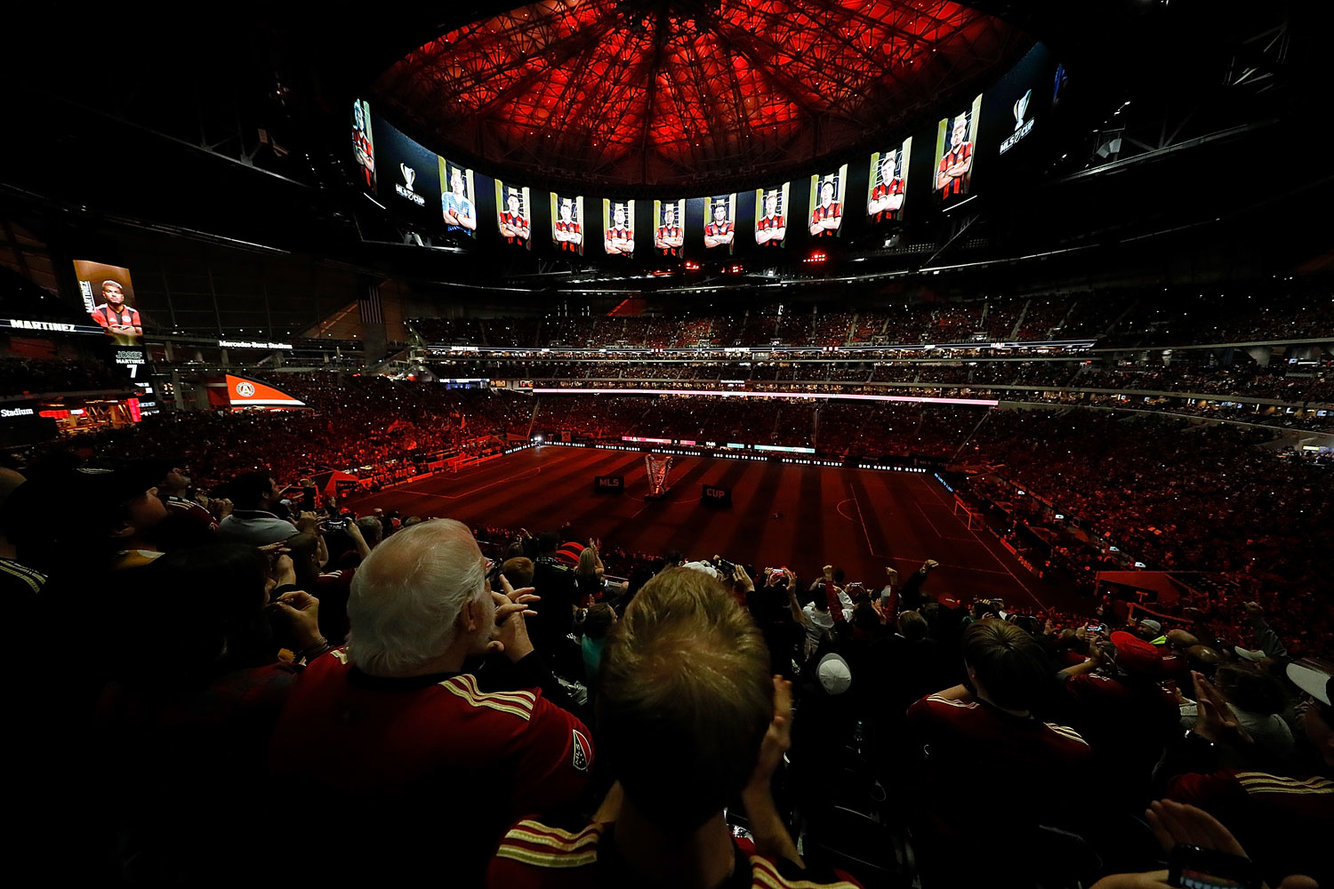
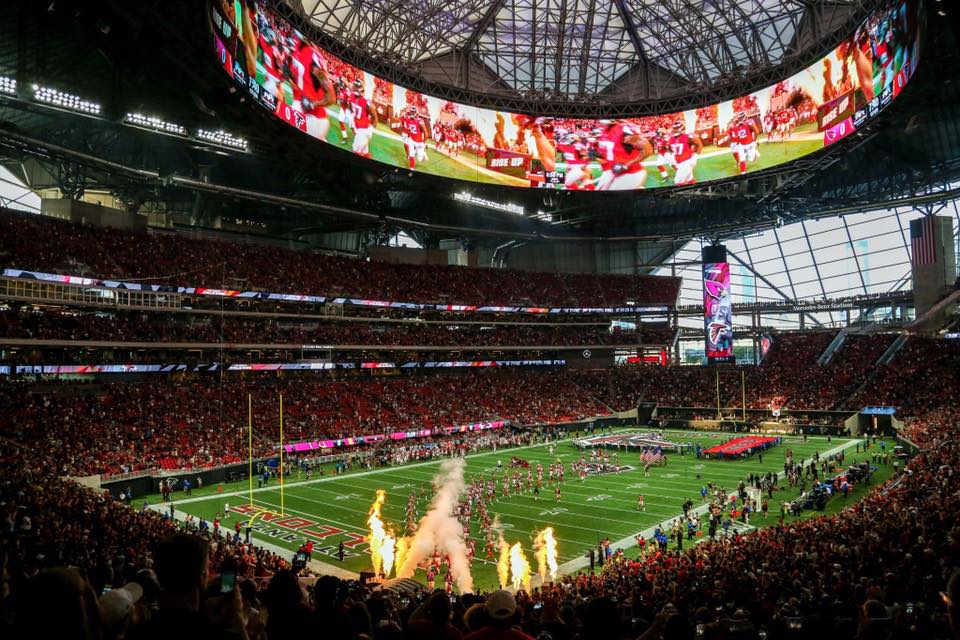
However, The Mercedes-Benz Stadium is fuelled by flexibility which is the key to developing, fostering, and growing the best fan experience. Hoye et al (2012) suggests that technological advancements have forced the sports property to protect the intellectual property with a marketable value. As according to Gaines and Cash (2019) the build cost $1.5 billion dollars for the stadium, which is an enormous investment. Therefore the Mercedes-Benz stadium have understood the potential of technological development in the world. Bassam (2018) believes they have generated a future-flexible and sustainable venue to maintain its status as a world leading venue long into its lifecycle.
Reference List:
Bassam, T. (2018) How IBM created the optimal fan experience at Mercedes-Benz Stadium [online] http://www.sportspromedia.com/from-the-magazine/mercedes-benz-stadium-fan-experience-ibm [Accessed 11th April 2019].
Delia, E. B., & Armstrong, C. G. (2015). Sponsoring the French Open: An examination of social media buzz and sentiment. Journal of Sport Management, 29, 184-199.
Gaines, C., Cash, M. (2019) Take a tour of Mercedes-Benz Stadium, the home to this year’s Super Bowl and one of the swankiest arenas in the NFL [online] Available at: https://www.businessinsider.com/photos-atlanta-falcons-new-mercedes-benz-stadium-2017-1?r=US&IR=T [Accessed 11th April 2019]
Hammond, T. (2014). Stadiums race to digitize: How sports teams are scrambling to keep millennials coming to games. [Online] April 11th, TechRepublic, Available at: http://www.techrepublic.com/article/how-sports-teams-are-scrambling-to-keep-millennials-coming-to-games/ [Accessed 10th April 2019].
Hochman, J. (2017) An Inside Look at the Technology Fueling Falcons’ Mercedes-Benz Stadium [online] Available at: https://www.sporttechie.com/inside-look-technology-fueling-mercedes-benz-stadium/ [Accessed 10th April 2019].
Horky, T., and Stelzner, B. (2013) Sports reporting and journalistic principles. In: Pdersen, P.M. (ed.) Routledge Handbook of Sport Communication. Oxon: Routledge. Pp. 118-127.
Hoye, R., Smith, A.C.T., Nicholson, M., Stewart, B. and Westerbeek, H. (2012) Sport Management, Principles and Practices. (3rd ed.) London: Routledge.
InfoPlease (2019) Atlanta, Georgia population. [online] Available at: https://www.infoplease.com/world/us-cities/atlanta-ga [Accessed 10th April 2019].
Lefever, K. (2012) New Media Landscape. Netherlands: TMC Asser Press.
Massaro, L. (2016) Are Chatbots the Future of Sports Fan Engagement? [online] Available at: https://www.linkedin.com/pulse/future-sports-engagement-has-arrived-chatbots-luca-massaro [Accessed 11th April 2019].
Reddy, T. (2015) 10 Ways Stadiums & Venues Are Using Technology to Delight Fans & Keep Them Coming Back. [Online] 29th September, Umbel, Available at: https://www.umbel.com/blog/publishers/10-ways-stadiums-are-using-technology-to-delight-fans/ [Accessed 10th April 2019].
Stadium of Pro Football (2017) Mercedes-Benz Stadium [online] Available at: https://www.stadiumsofprofootball.com/stadiums/mercedes-benz-stadium/ [Accessed 10th April 2019].
Stoffel, C. M., & Kapustka, P. (2015). The 2014 State of the Stadium Technology Survey. Burlingame, California: The Mobile Sports Report.
Thompson, A.J., Martin. A.J., Gee, S., and Geurin, A.N. (2016) Fans’ Perceptions of Professional Tennis Events’ Social Media Presence: Interaction, Insight, and Brand Anthropomorphism. Communication and Sport, pp. 1-25. oken-
 Sporting Geek